
For most US fixed income investors, 2026 has been a year of energy-driven inflation and a Federal Reserve that stopped cutting and started raising rates again. Israel has gone the other way. Its annual inflation rate surprised many in October, falling to 1.1% according to the Central Bureau of Statistics, against the roughly 1.5% that forecasters expected. That is the lowest rate in five and a half years, close to the bottom of the Bank of Israel's 1–3% target range, and well below the 3.7% the US last reported.
Part of October's drop was arithmetic. A 0.5% monthly rise in October 2025 fell out of the annual comparison and was replaced by a 0.1% decline, and cheaper travel abroad and domestic flights after the holidays subtracted about 0.23 percentage points on its own. Even so, prices fell 0.3% after seasonal adjustment, so the low reading is not just a calendar effect. The more useful question is why Israel's inflation environment differs so much from that of other developed economies.
The Bank of Israel has cut its policy rate five times since November 2025, to 3.25%, and meets again on November 23, when another cut is possible. The 10-year shekel government bond now yields less than the 10-year Treasury, each measured in its own currency.
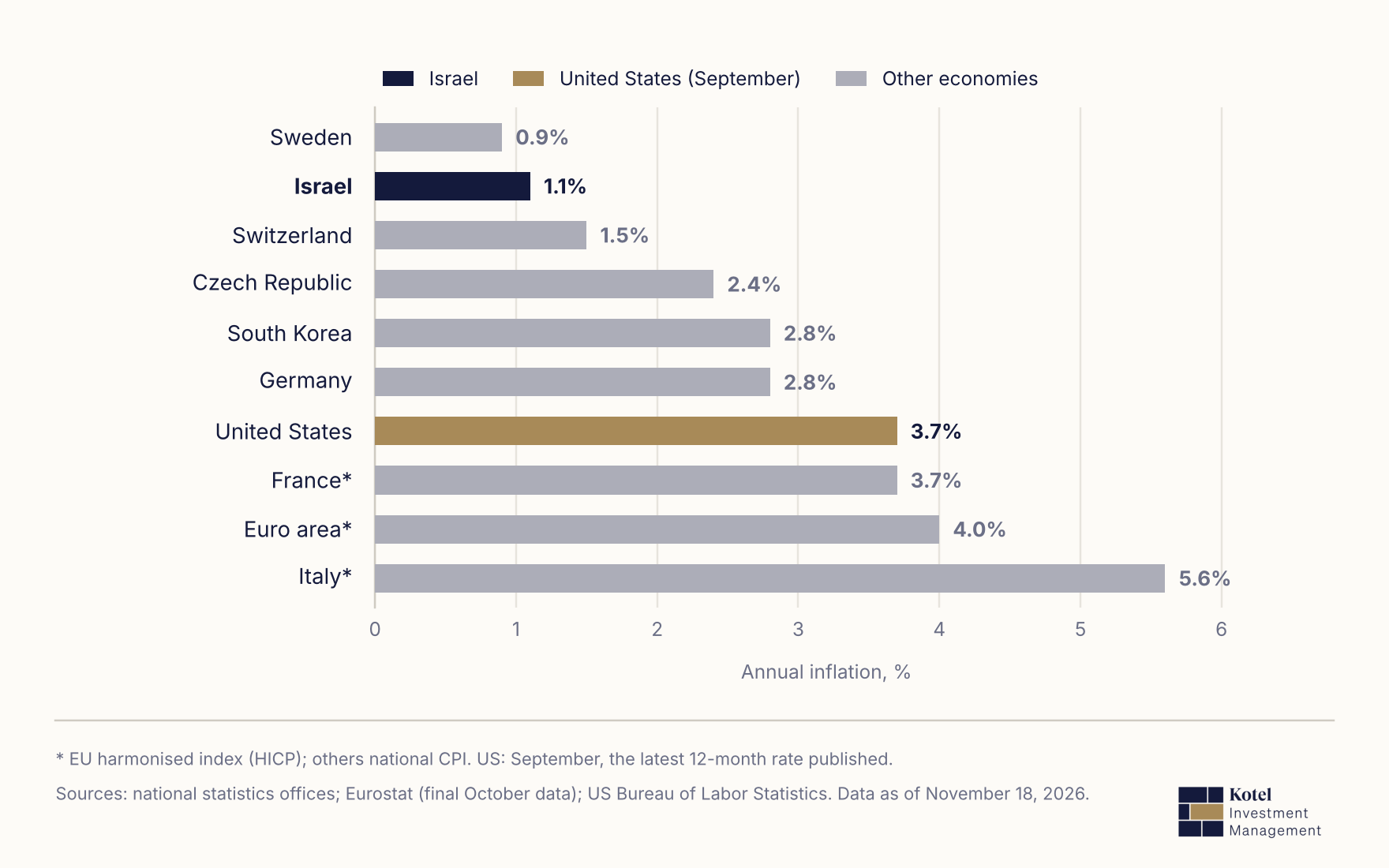
Figure 1. Annual inflation in Israel and selected economies, October 2026 (United States: September).
For a US investor, this is the relevant point. Israel is a developed bond market whose inflation is driven by different forces from those driving inflation at home, whose central bank has moved in the opposite direction from the Fed, and whose bonds are held mainly by local savers. Each of those features shapes how Israeli fixed income behaves relative to the US market. Each also has limits, and the limits are what an investor needs to watch.
Energy is not the source of Israeli inflation
In the United States and Europe, this year's inflation is largely an energy story. The war with Iran and the closure of the Strait of Hormuz pushed oil sharply higher. US gasoline prices were up about a third over the year to September, and gas prices became a central issue in this month's midterm elections. Strip out food and energy and US inflation was much lower, at 2.6%.
In Israel, energy has added close to nothing. Inflation excluding energy was 1.0% in October, almost the same as the headline rate. There are two reasons, and they differ in how long they will last.
Electricity is structurally insulated. Most of Israel's power comes from natural gas produced in its own offshore fields, Tamar, Leviathan and Karish, under contracts linked to US consumer prices or to the regulated tariff rather than to oil. As a local bond trader and macro specialist put it to us, this means the ongoing disruption in the Strait of Hormuz hurts Israel less than it hurts Europe or Asia. The country most people see as closest to the Iran war, apart from Iran itself, has been largely insulated from the Hormuz closure where power prices are concerned. The Bank of Israel made the same point in March. The protection covers price, not supply: when two of the gas fields were shut for security reasons in the spring, the power system burned more coal and diesel.
Fuel is a different matter. Israel imports nearly all its crude oil, but very little of it comes from the Gulf. Ship-tracking data show that most of it comes from Azerbaijan, shipped through Turkey, and from Kazakhstan, shipped through Russia's Black Sea ports. This is a legacy of Israel's position in the region: for decades it could not count on Arab oil producers, so it built its supply elsewhere. The same isolation that was long a disadvantage meant that none of Israel's crude had to pass through Hormuz when the strait closed.
Where the oil comes from does not decide what it costs, however. Israel's regulated pump price is reset each month from Mediterranean gasoline prices converted into shekels, so Israeli drivers pay the world price. By September, gasoline had reached about 8.25 shekels a liter, matching its 2012 record. The government responded with a temporary cut in fuel excise, the fixed tax per liter built into the pump price: half a shekel a liter in September, doubled to a full shekel in October. As oil prices eased in early November, the relief was halved again, and it is scheduled to end with November. Part of Israel's low fuel inflation this autumn was therefore a budget decision, and it is being reversed.
The practical point for an investor is that an oil shock, the main inflation risk for US bonds this year, reaches Israeli inflation only partly and with a lag. Part of that insulation is structural. Part of it was a temporary policy choice.
The real source: rent
If not energy, then what is the source of Israel's current inflation? Almost all of Israel's remaining inflation is rent. Housing is the largest item in the CPI basket, and it measures rents, both those tenants pay and an estimate of what owners would pay to rent their own homes, rather than home prices. In October, prices of everything outside housing were slightly lower than a year earlier.
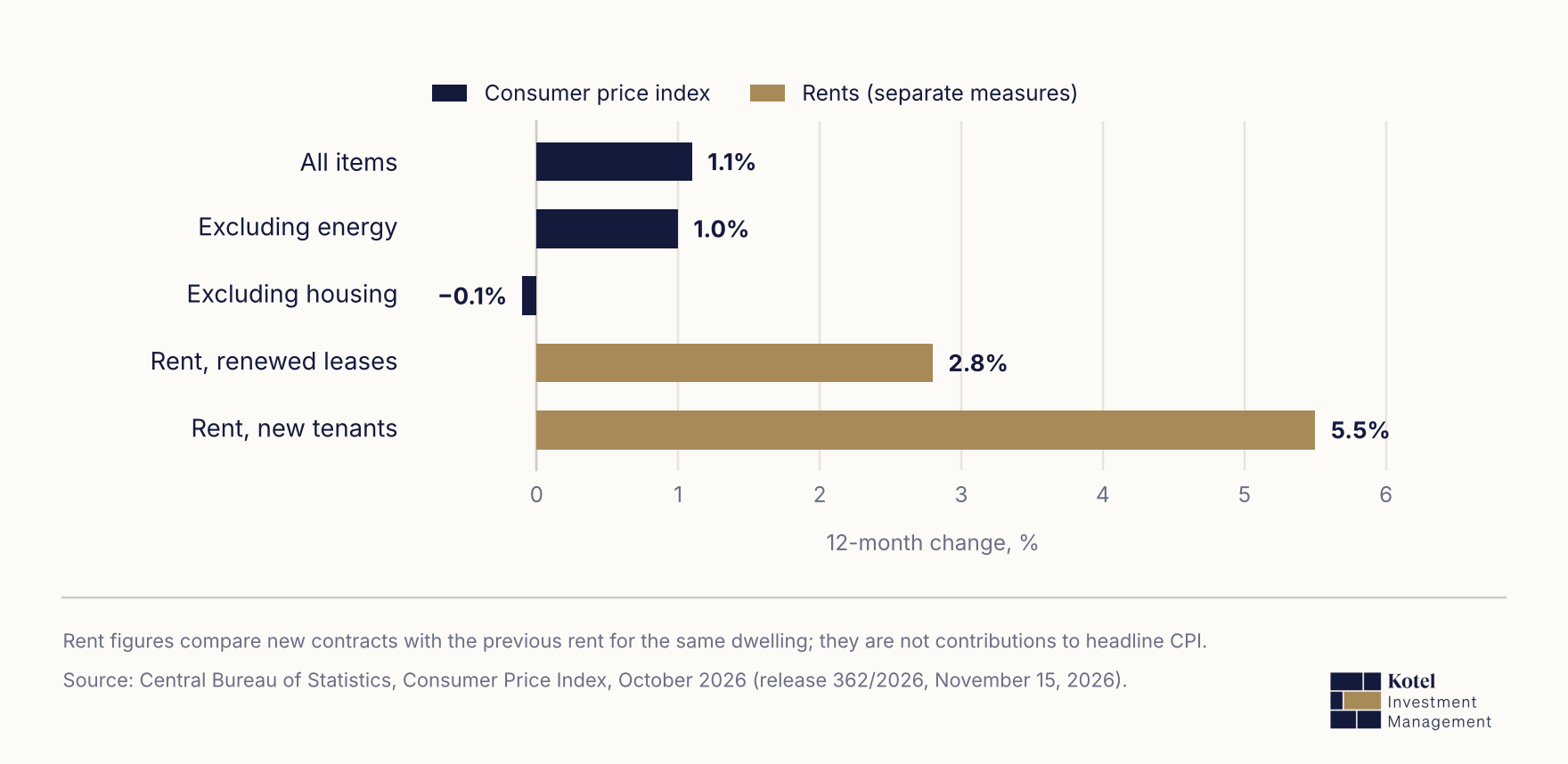
Figure 2. Israeli CPI and rents, 12-month change to October 2026. Outside housing, prices were lower than a year earlier.
Rent is also the stickiest part of the index. Most Israeli leases fix the rent for a year or more, so the index catches up only as leases are renewed, and new tenants are currently paying noticeably more than renewing ones. Interest rate cuts do little to change this in the short run. For a bond investor, this means the most persistent source of current Israeli inflation is the domestic rental market, not the global oil market.
The shekel: a tailwind that is turning
For anyone looking at Israeli bonds from the US, the shekel matters in two ways.
The first is through prices. Israel imports much of what it consumes, from cars and electronics to clothing and fuel, and those goods are priced in dollars or euros. When the shekel strengthens, the same imported goods cost fewer shekels, and inflation falls. When it weakens, they cost more, and inflation rises. Because the Bank of Israel sets rates to keep inflation in its target range, the currency also feeds into how far it can cut.
The second is through returns. For an investor who measures performance in dollars, the exchange rate is part of the return on any shekel asset, alongside the yield and any change in bond prices.
For most of this year the shekel worked in Israel's favor on prices. It was one of the strongest currencies in the world against the dollar. The Bank of Israel links that strength to the fall in Israel's risk premium. A second force came from Israel's own institutions. Israeli pension funds and insurers hold a large share of their assets abroad, much of it in US equities. When those markets rise, the dollar value of their foreign holdings grows, and to keep their currency exposure within their targets they sell dollars and buy shekels. A strong year on Wall Street therefore tends to support the shekel. That support has recently diminished. According to the Bank of Israel, institutional investors' net foreign-currency sales fell to about $4.4 billion in the third quarter, from about $13.8 billion in the second. The mechanism is still in place, but the flow behind it is smaller, and the shekel has weakened since the summer.
The effect shows up in the split between two kinds of prices. Tradable goods are those that can be bought and sold across borders, such as cars, appliances, clothing and fuel. Their prices follow world prices and the exchange rate. Non-tradables are goods and services produced and consumed at home, such as rent, haircuts, restaurant meals and education. Their prices follow local wages and demand, and the currency affects them only indirectly, through imported inputs and costs. Over the past year, tradable goods became cheaper while non-tradables kept rising.
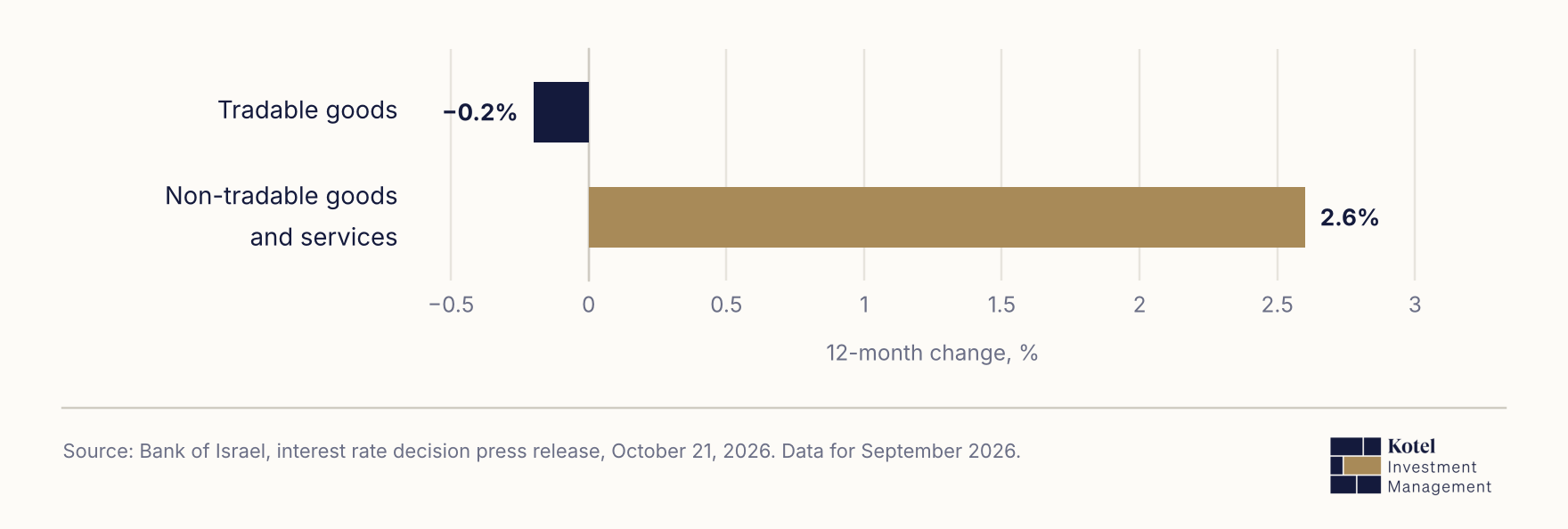
Figure 3. Tradable and non-tradable prices in Israel, 12-month change to September 2026.
How durable is Israel's low inflation?
The October figure is accurate. The question is whether the conditions behind it will last. It helps to sort the forces by direction. Rent is pushing inflation up, and it is the most persistent part of the index. Gas-linked electricity is a stabilizer: it reduces the sensitivity of domestic power prices to global oil prices. The fuel tax cut and the strong shekel have been pulling inflation down, but both are temporary, and as they unwind they turn from a drag on inflation into a source of it. Forecasters surveyed by the Bank of Israel expect inflation to drift back toward 2% during 2027. The risk from here is that inflation rises from a low base, not that it falls much further.
Set side by side, the split between permanent and passing conditions looks like this:
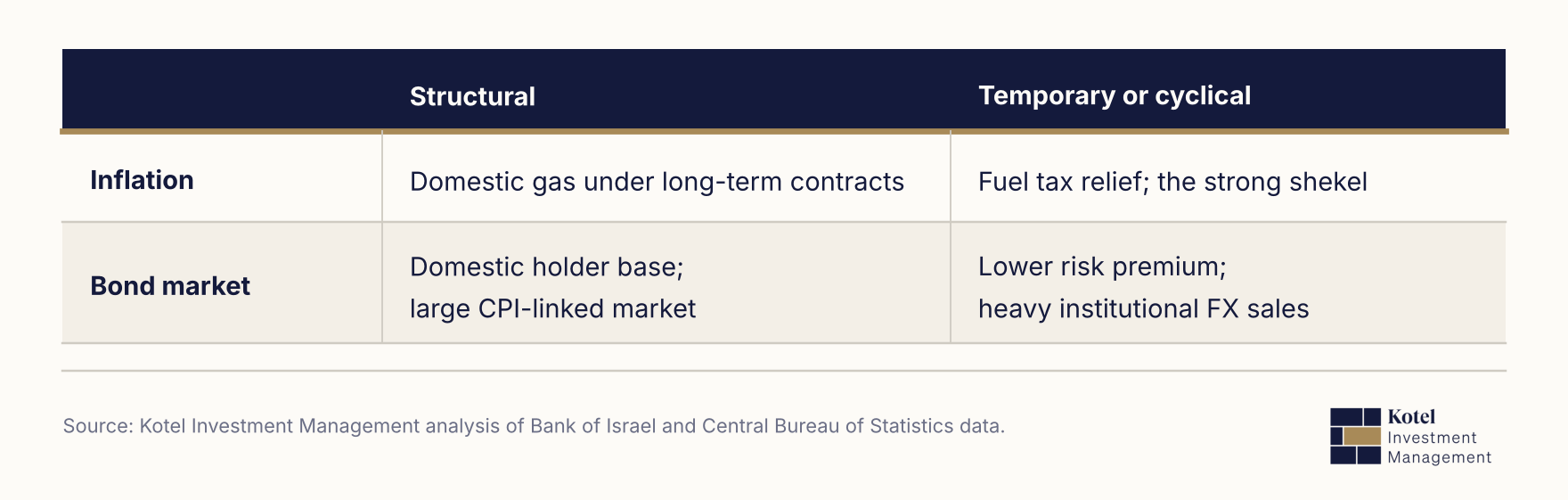
Table 1. Structural and temporary conditions behind Israel's low inflation and the behavior of its bond market.
The structural features explain why Israel responds differently to global shocks. The temporary ones help explain why inflation is so low today. Investors should not confuse the two.
What it means for Israeli bonds
The short end. The Bank of Israel has room to cut again. The case for several more cuts is weaker: the labor market remains tight, the temporary supports are fading, and the Fed is no longer easing. The Bank of Israel's own October forecast has its policy rate at 3.0% in the third quarter of 2027, one quarter-point cut from today. That describes a central bank likely near the end of its easing cycle, not one about to reverse course. Under the current baseline, the question for the short end of the curve is how far the Bank of Israel goes, not which direction it moves.
Nominal versus CPI-linked bonds. This choice matters more in Israel than in most markets, because almost half of government debt is linked to the CPI. A CPI-linked bond's principal adjusts with realized inflation, so this year's low readings have reduced the inflation adjustment these bonds accrue. If the temporary supports fade and inflation drifts back toward 2%, that accrual recovers. If rents cool and the shekel holds, the low-inflation environment lasts longer. What matters is not the direction of inflation alone but whether it ends up above or below what the market already expects, because that is what decides how linked bonds fare against nominal ones.
Energy independence. Domestic gas does more than keep electricity bills steady. Because an oil shock reaches Israeli inflation only partly, all else equal it reduces one source of inflation risk for long-dated Israeli bonds, even when energy prices are pushing yields up elsewhere. Gas exports to Egypt and Jordan are priced off oil, so higher oil prices raise Israel's export revenues, partly offsetting the higher cost of imported oil. The limit is physical: the fields are offshore and within range of attack, and this year they were shut for weeks. The protection is against the price of energy, not against a supply disruption.
The holder base. Israeli government bonds are held mainly by local pension funds, insurers and provident funds, which receive a steady flow of mandatory retirement savings. Foreign investors hold about 10% of tradable shekel government bonds and about 1% of shekel corporate bonds. The October election showed what this means under stress. On the first trading day after the results, Israeli equities and the shekel fell sharply, while the 10-year yield barely moved. For a US investor, the significance is that the Israeli bond market is less exposed to foreign withdrawals than many other developed markets. A steady domestic savings flow provides demand, although it does not stop yields from adjusting to fiscal, monetary or geopolitical change.
Corporate bonds. These dynamics also extend to Israel's corporate bond market, where both nominal and CPI-linked debt are widely used. Inflation and interest rates affect issuers differently depending on how their debt is structured, how much they need to refinance and how their revenues respond to inflation.
The holder base helps explain why yields tend to move less in a shock. It does not explain their level. That depends on the risk premium, which has returned to roughly pre-war levels according to the Bank of Israel. Low inflation, a lower policy rate and a lower risk premium together explain why the 10-year shekel bond now yields less than the Treasury in local-currency terms.
Where things could be heading
The current calm rests on conditions that differ in how long they will last. Three developments are worth watching over the next year.
Divergence from the Fed. The Bank of Israel is cutting while the Fed has been raising rates, and Israeli short-term rates now sit below US rates. A wider gap can weigh on the shekel, putting upward pressure on import prices and potentially limiting further rate cuts. The Fed, in other words, has an indirect say in how far Israeli rates can fall. It also means the relevance of Israeli government bonds to US investors rests less on headline yield than on the different forces that drive them.
The fiscal path. The war has been expensive, and defense spending is now about three times the OECD average while civilian spending and taxes are already low by OECD standards. In all three debt scenarios in the Governor's November presentation, public debt rises as a share of GDP after 2027; the paths differ mainly in how much is spent on defense. The Governor calls this a fiscal trilemma for the next government. For long-dated bonds, how that is resolved, starting with the 2027 budget, matters more than any monthly CPI reading.
The risk premium. Since October 2023, the shekel and Israel's credit spreads have tended to move together. Recently the shekel has weakened without any rise in credit spreads, which suggests interest rate differences may be playing a greater role than renewed concern about Israeli risk. If the risk premium did widen again, the effects would compound: a weaker shekel, higher import prices and less room for the Bank of Israel to cut. The domestic holder base may moderate the move in yields, but would not prevent repricing.
The Bank of Israel's decision on November 23, the scheduled end of the fuel tax relief in November, the November inflation readings in both countries in mid-December and the 2027 budget will show which way these conditions break.
Bottom line
Israeli inflation is not driven by the same forces driving inflation in the US. Electricity is largely insulated from oil, and the remaining inflation comes from rents. The Bank of Israel is easing while the Fed is not, and Israeli bonds are anchored by a domestic savings system rather than by foreign capital. For a US investor, those differences are the reason Israeli bonds behave differently from Treasuries, which makes Israel a distinct market rather than a proxy for US rates. The things to watch are the temporary supports that are now fading, the gap between Israeli and US rates and what it means for the shekel, and the fiscal choices that will set the level of Israeli yields in the years ahead. The task is to separate the structural differences from the temporary conditions, and to judge how much of each is already reflected in bond prices.
About Kotel Investment Management: We serve as a bridge between global capital and Israeli markets. Our research covers Israel's economy, financial system and markets for institutional investors, family offices and advisors.
This content is for informational and educational purposes only. It does not constitute investment, legal or tax advice, or an offer to sell or a solicitation of an offer to buy any securities. Figures are as of the dates cited and may change. Forecasts referenced are those of the third parties named and do not necessarily reflect the views of Kotel Investment Management.
Sources
Central Bureau of Statistics, Consumer Price Index, October 2026 (release 362/2026)
Bank of Israel, Governor Amir Yaron, "The Israeli Economy," presentation to the Israel Hedge Fund Association annual conference, November 11, 2026 (debt scenarios: slide 28)
US Bureau of Labor Statistics, Consumer Price Index, September 2026
Federal Reserve, FOMC statement, October 28, 2026
Bank of Israel, interest rate decision, October 21, 2026
Bank of Israel, Monetary Committee discussions, March 2026
Bank of Israel, exchange-rate pass-through research note
Bank of Israel, Israel's foreign currency market in the third quarter of 2026, November 3, 2026
Czech Statistical Office, consumer price indices, October 2026
Globes, CPI up 0.5% in October 2025
Bank of Israel, Information and Statistics Department, Corporate Bond Holdings by Sector (data to August 2026)
Ministry of Finance, Accountant General, Annual Debt Report 2025
Electricity Authority, State of the Electricity Sector report, 2024–25
IMF, Israel Article IV consultation, 2026
Eurostat, euro-area annual inflation, final October 2026 data, November 18, 2026
Reuters/Kpler data on Israeli crude imports (via The Jerusalem Post)